
Pumpkins aren’t just for carving jack-o’-lanterns—they’re versatile, nutritious, and a favorite in American kitchens, especially during fall. But growing pumpkins can be tricky: sprawling vines often take up too much space, and fruits sometimes remain small or less sweet. The solution? Growing pumpkins on a trellis. This technique maximizes space, increases airflow, reduces pests, and can even improve fruit sweetness. In this guide, we’ll explore everything American gardeners need to know to grow pumpkins vertically—from planting to harvest.
Why Grow Pumpkins on a Trellis?
Before you start, it’s important to understand why vertical pumpkin gardening is becoming popular:
- Space-Saving: Perfect for small yards, patios, and urban gardens.
- Better Fruit Quality: Elevating pumpkins improves sunlight exposure, airflow, and reduces rot.
- Pest and Disease Control: Keeping fruits off the ground helps prevent pests and fungal infections.
- Easier Harvesting: No more crawling through sprawling vines—fruits are easier to reach.
By adopting a trellis system, you can grow more pumpkins in less space and enjoy healthier, sweeter harvests.
Step 1: Choosing the Right Pumpkin Variety

Not all pumpkins are ideal for vertical growth. For American gardeners, consider these types:
- Small Varieties: ‘Jack Be Little,’ ‘Baby Boo,’ or ‘Sugar Pie’—perfect for trellises and container gardening.
- Medium Varieties: ‘Cinderella,’ ‘Lumina,’ or ‘Connecticut Field’—work well if supported properly.
- Large Varieties: ‘Atlantic Giant’ can be grown vertically but requires strong support slings for heavy fruits.
Pro Tip: Choose a variety suited to your local climate and intended use (cooking, decorating, or both).
Step 2: Preparing Your Trellis
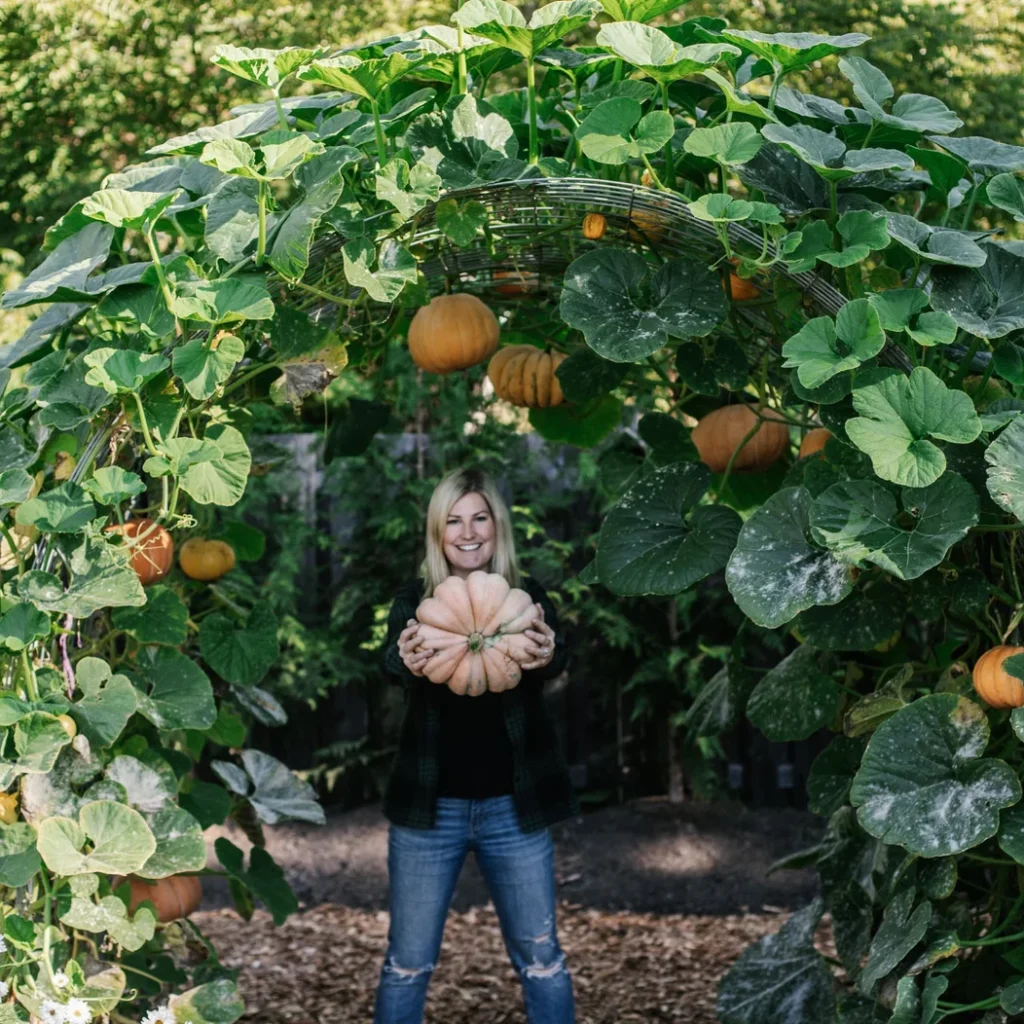
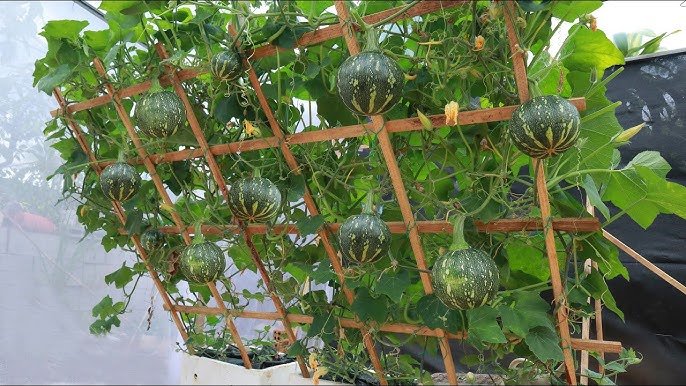
A sturdy trellis is essential for vertical pumpkin growth:
- Materials: Wood, metal, or heavy-duty plastic.
- Height: At least 6–8 feet tall for medium pumpkins. Taller for giant varieties.
- Structure: A-frame or vertical lattice designs are popular.
- Support: Ensure the trellis is anchored securely to withstand strong winds and the weight of pumpkins.
Pro Tip: For heavier fruits, plan to use support slings made from cloth or netting to cradle each pumpkin.
Step 3: Preparing the Soil
Pumpkins are heavy feeders and need rich, fertile soil:
- Soil Type: Loamy, well-draining soil is best.
- pH Level: Slightly acidic to neutral (6.0–7.0).
- Fertilization: Mix in compost, aged manure, or organic fertilizer before planting.
- Raised Beds: Ideal for trellis pumpkins, improving drainage and root development.
Pro Tip: Mulch around the base to retain moisture and regulate soil temperature.
Step 4: Planting Pumpkins
Planting properly ensures vigorous growth:
- Start seeds directly in the garden after the last frost or start indoors 2–4 weeks earlier for shorter seasons.
- Plant seeds 1 inch deep in rich soil at the base of the trellis.
- Space seeds 12–18 inches apart to allow sufficient airflow and vine growth.
Pro Tip: If growing indoors first, transplant seedlings carefully to avoid root shock.
Step 5: Training Vines on the Trellis
Vertical gardening requires consistent training:
- Initial Growth: Guide the main vine up the trellis once it reaches 12–18 inches.
- Lateral Shoots: Allow secondary vines to grow along the trellis for maximum fruiting.
- Pinching: Pinch off excessive lateral shoots to focus energy on producing larger, sweeter pumpkins.
Pro Tip: Use soft ties or garden twine to secure vines without damaging them.
Step 6: Watering and Fertilizing
Pumpkins need consistent moisture and nutrients:
- Watering: Deep, weekly watering is ideal. Avoid wetting foliage to reduce fungal risk.
- Fertilizing: Side-dress with compost or balanced fertilizer every 3–4 weeks.
- Nitrogen Management: Use higher nitrogen early for vine growth; switch to potassium and phosphorus as flowers appear to encourage fruit development.
Pro Tip: Drip irrigation or soaker hoses reduce leaf wetness and disease risk.
Step 7: Pollination
Pumpkin flowers require pollination to set fruit:
- Bees: Native bees and honeybees are excellent natural pollinators.
- Hand Pollination: For trellised pumpkins in areas with fewer pollinators, use a small paintbrush to transfer pollen from male flowers to female flowers.
- Flower Identification: Male flowers are thin and hollow; female flowers have a small fruit at the base.
Pro Tip: Morning pollination yields the best results since flowers are fresh and open.
Step 8: Supporting Fruits
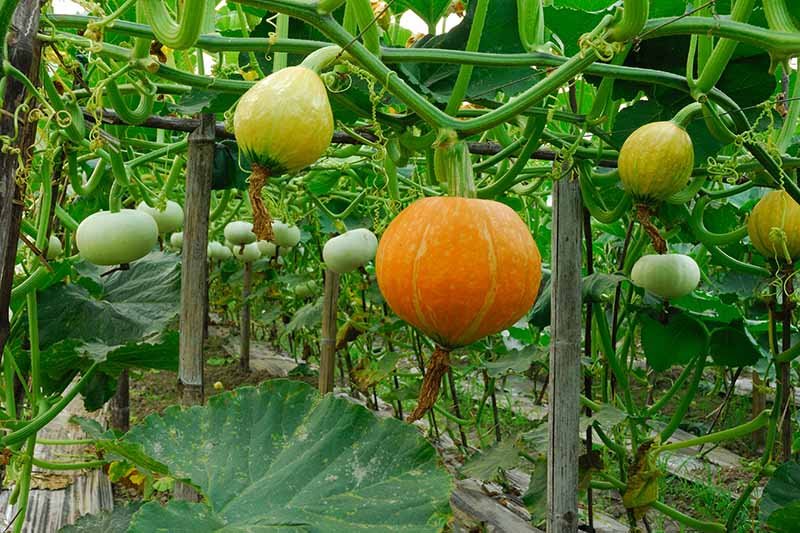
For vertical pumpkin gardening, fruit support is critical:
- Slings: Use cloth, old t-shirts, or mesh bags to cradle pumpkins.
- Tying: Attach slings to the trellis, ensuring the fruit hangs comfortably without strain.
- Weight Management: Support is especially important for medium to large pumpkins; small varieties often require minimal support.
Pro Tip: Check slings regularly to avoid rubbing or cutting into the pumpkin skin.
Step 9: Pest and Disease Management
Trellised pumpkins face fewer issues, but vigilance is key:
- Common Pests: Squash bugs, aphids, cucumber beetles.
- Organic Solutions: Neem oil, insecticidal soap, and hand-picking pests are effective.
- Diseases: Powdery mildew or downy mildew may occur in humid conditions. Improve airflow and avoid overhead watering to reduce risk.
Pro Tip: Rotate crops annually to prevent soil-borne diseases.
Step 10: Harvesting Pumpkins
Harvest timing impacts both flavor and sweetness:
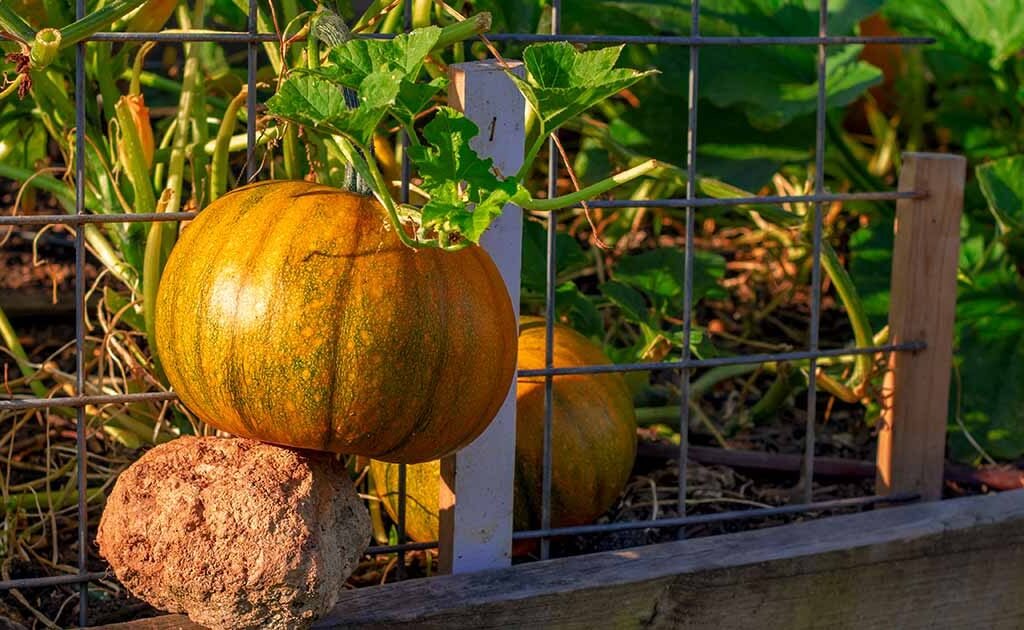
- Indicators: The skin is hard, color is vibrant, and the vine begins to yellow and dry.
- Cutting: Use garden shears or a sharp knife to cut pumpkins from the vine, leaving a few inches of stem attached.
- Curing: Cure pumpkins in a warm, dry area for 7–10 days to enhance sweetness and storage life.
Pro Tip: Handle fruits gently to avoid bruising, which can shorten shelf life.
Tips for Sweeter Pumpkins
- Ensure full sun exposure—at least 6–8 hours per day.
- Avoid overwatering once fruits form; moderate stress encourages sugar accumulation.
- Regular fertilization with potassium-rich fertilizers supports fruit development and sweetness.
- Remove excess flowers to focus energy on fewer, higher-quality fruits.
Benefits of Trellis Pumpkins for American Gardeners
- Space Efficiency: Ideal for urban gardens, patios, and small backyards.
- Improved Yield: Vertical growth allows more fruits in the same footprint.
- Healthier Plants: Better airflow reduces disease and pest pressure.
- Aesthetic Appeal: Trellised vines create a beautiful, edible vertical garden.
Final Thoughts
Growing pumpkins on a trellis is a game-changer for American gardeners. It maximizes space, produces more fruits, and improves sweetness while reducing disease and pest problems. Whether you’re growing small decorative pumpkins for Halloween or large varieties for cooking, a trellis system is both practical and rewarding.
Start with the right variety, train your vines carefully, and support your fruits properly—and you’ll enjoy a bountiful, healthy, and sweet pumpkin harvest right from your backyard or patio

Leave A Comment